Nova Scotia Planters
“Preserving the stories, records, and lives of those who came before us.”
The arrival of the New England Planters in Nova Scotia marked one of the most significant migrations into Atlantic Canada during the eighteenth century. Following the Expulsion of the Acadians beginning in 1755, the British government sought to repopulate the fertile lands of Nova Scotia with Protestant settlers loyal to the Crown. Between 1760 and 1768, thousands of settlers known as the “Planters” arrived from the New England colonies, particularly from Massachusetts, Connecticut, and Rhode Island.
Among the prominent Planter families connected to this migration were the McNutt, Wier, and Whidden families, whose descendants became deeply rooted in the social, agricultural, and political development of Nova Scotia. Alexander McNutt and the Planter Migration Alexander McNutt was an Ulster-born military officer, land agent, and colonial entrepreneur who played a major role in promoting settlement in Nova Scotia after the removal of the Acadians. Born in Ireland around 1725, McNutt served with British colonial forces during the Seven Years’ War before turning his attention to large-scale colonization schemes in British North America. McNutt aggressively recruited settlers from New England and the British Isles, promising fertile farmland and economic opportunity in Nova Scotia. He became one of the principal organizers encouraging Rhode Island and Connecticut families to relocate northward during the early 1760s. His promotional efforts contributed substantially to the establishment of Planter townships throughout western Nova Scotia and the Annapolis Valley. Although some of McNutt’s land ventures became controversial due to overlapping grants and speculative practices, his influence on Nova Scotia’s demographic transformation was immense. Entire family networks from Rhode Island migrated under settlement agreements associated with his recruitment campaigns. The Rhode Island Planters Many Rhode Island settlers came from established colonial farming and maritime communities seeking new agricultural opportunities. They were generally Congregationalist or Baptist families accustomed to local self-government, frontier agriculture, and coastal trade. The migration to Nova Scotia was not simply an isolated movement of individuals; it involved interconnected kinship groups who often traveled together and settled near one another. These communities recreated familiar New England social structures while adapting to the realities of life in Nova Scotia. The Planters introduced: New England-style township government Protestant church traditions English common-law landholding systems Agricultural techniques suited to Atlantic climates Expanding trade networks across the Bay of Fundy and New England The Wier Family Wier family families were among the Planter settlers connected to the Rhode Island migration into Nova Scotia during the 1760s. The surname appears in early township and land records throughout western Nova Scotia, particularly in communities influenced by New England settlement patterns. Members of the Wier family became involved in farming, local governance, church life, and regional commerce. Through intermarriage with other Planter families, the Wiers became part of the extensive kinship networks that shaped rural Nova Scotian society for generations. Genealogically, the Wier family is significant because its descendants often intersect with Loyalist, Planter, and maritime family lines throughout Nova Scotia and New Brunswick. The Whidden Family Whidden family descendants trace their origins to New England colonial settlements before relocating to Nova Scotia as part of the Planter movement. The family became established in western Nova Scotia, especially in areas opened to settlement following the Acadian deportations. The Whiddens participated in the agricultural and maritime economy that sustained many Planter communities. Over time, family members spread into neighboring counties and became integrated into broader Atlantic Canadian society through marriage, migration, and trade. The surname remains closely associated with Planter genealogy in Nova Scotia and appears frequently in township grants, church registers, probate files, and census records. Legacy of the Planters The New England Planters profoundly shaped the cultural and demographic identity of Nova Scotia. Their arrival helped establish enduring English-speaking Protestant communities throughout the province and laid much of the agricultural and political foundation of pre-Confederation Nova Scotia. For genealogists, Planter ancestry offers exceptionally rich research opportunities through: township records land petitions church registers probate files New England colonial records early Nova Scotia censuses migration and shipping records The interconnected histories of the McNutt, Wier, and Whidden families illustrate how migration, kinship, and colonial settlement combined to reshape Atlantic Canada in the decades following the Seven Years’ War.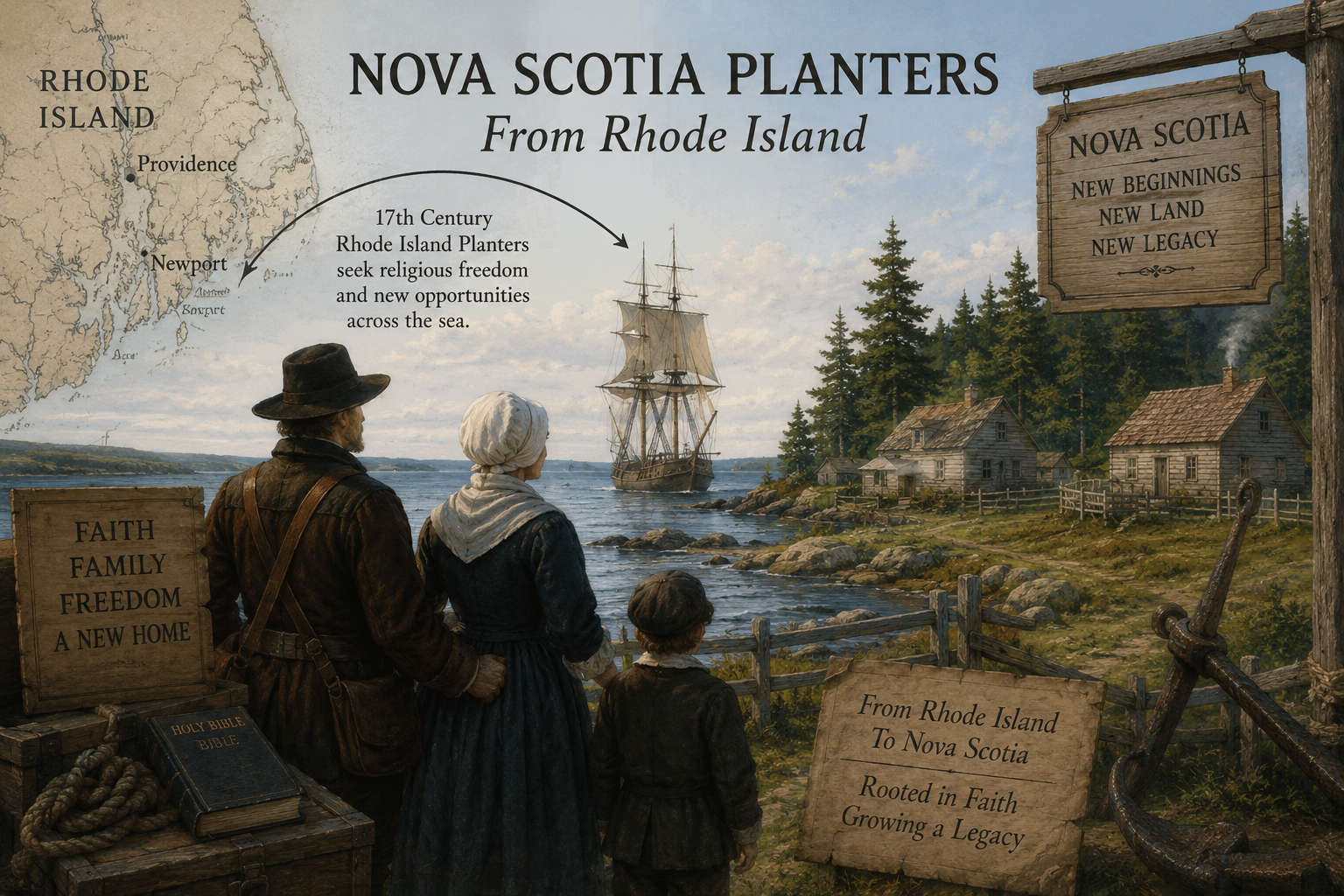
Migration & Settlement
Many branches of the family emigrated during the great waves of migration in the seventeenth through nineteenth centuries. Parish records, census returns, shipping lists, military files, and probate records have helped reconstruct these journeys and the lives connected to them.
This collection continues to grow through ongoing archival research and collaboration with distant relatives and historians. Every document and photograph contributes another piece to the larger historical narrative of the family.